2024 Most Popular Coffee Packaging Questions, Answered
Clear answers on sustainability, freshness, and cost decisions coffee brands face in 2024
Coffee packaging is no longer just about holding beans. In 2024, it sits at the intersection of product quality, brand trust, sustainability claims, and operational cost.
What we see most often is not a lack of options, but decision fatigue. There are too many materials, formats, and claims, and not enough clarity on what actually matters.
In 2024, coffee packaging decisions fail most often because brands try to optimize everything at once instead of prioritizing sustainability, freshness, and cost in the right order.
This guide answers the most common coffee packaging questions of the year, using real-world packaging logic to help roasters and brands make better, more confident choices.
Sustainable coffee packaging in 2024 – what actually works
Sustainability is the first question most coffee brands ask, and often the hardest one to answer well.
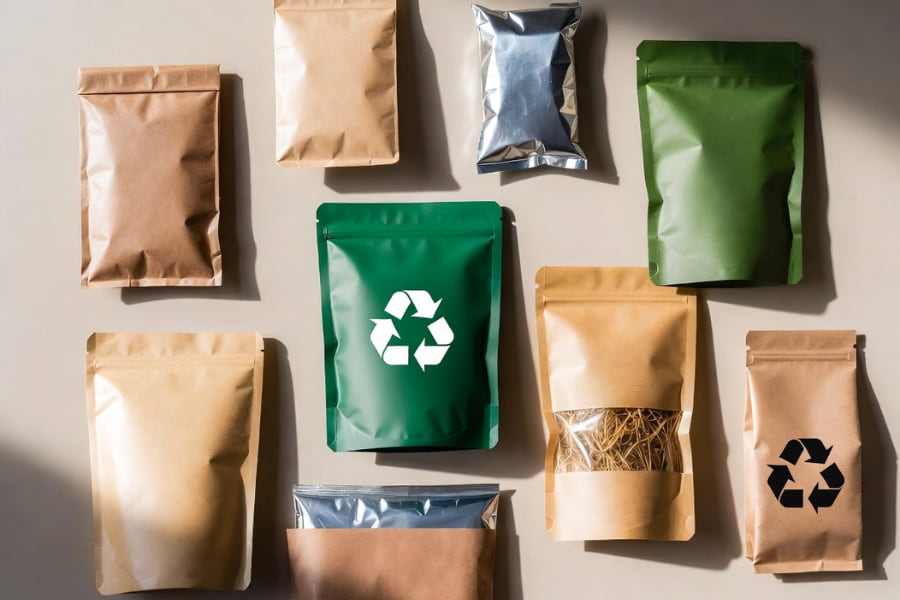
What are the most practical sustainable coffee packaging options in 2024?
Today’s sustainable packaging generally falls into three categories.
Compostable materials, including industrially compostable films, PLA-based structures, and plant-derived woven materials designed for controlled composting environments
Recyclable materials such as LDPE, PET, kraft paper, rice paper, and paperboard-based formats
Reusable packaging systems, including refillable containers and durable aluminum solutions, which are gaining adoption in closed-loop programs
No option is universally perfect. Compostable packaging depends on proper disposal access. Recyclable packaging depends on consumer behavior and local recycling infrastructure. Reusable systems require strong operational coordination.
Is sustainable coffee packaging worth the added cost?
According to recent consumer packaging studies, around 63 percent of consumers say they are willing to pay more for brands with strong sustainability practices. At the same time, roughly 42 percent believe sustainability should not significantly increase product price.
This tension is real. The most successful brands treat sustainability as a communication and prioritization exercise, not a materials race. The goal is to choose packaging that aligns with brand values, stays within budget, and can be clearly explained to customers.
Which packaging materials keep coffee fresh longer
Freshness remains the most critical technical function of coffee packaging, regardless of sustainability goals.
What materials best protect coffee quality?
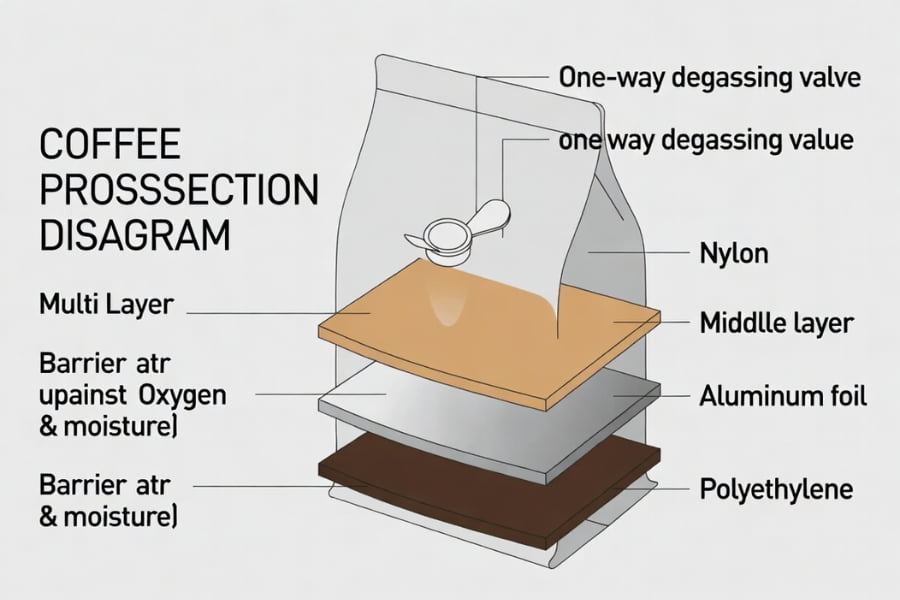
From a performance standpoint, aluminum-based barrier layers remain the most effective solution. They block oxygen, moisture, and light, the three primary causes of coffee degradation.
Most modern coffee packaging uses multi-layer structures that combine barrier performance with outer layers designed for durability, printing, or sustainability goals. For freshly roasted coffee, one-way degassing valves are essential, allowing carbon dioxide to escape while preventing oxygen from entering.
Does packaging affect coffee safety or health?
Yes. Packaging must meet food-grade safety standards.
Inks, adhesives, and laminating materials should be non-toxic and compliant with relevant food-contact regulations. Many brands now use water-based or soy-based inks to reduce risk. While coffee itself offers natural benefits, packaging should never compromise safety.
How to choose the right size, cost, and customization level
Cost and operational efficiency often determine whether a packaging strategy is scalable.
What packaging sizes work best for coffee subscriptions?
Most subscription programs rely on sizes between 4 oz and 12 oz, adjusted based on delivery frequency and customer consumption habits.
Flexibility matters. Allowing customers to choose size and shipment cadence can improve retention, but packaging systems must support multiple SKUs without inflating inventory complexity.
What are the most cost-effective packaging options for small roasters?
Several approaches consistently reduce financial pressure.
Digital printing, which supports lower minimum order quantities and faster turnaround
Stock bags combined with custom labels, offering brand visibility with minimal upfront investment
Simplified design systems, which reduce ink usage, setup complexity, and waste
This allows brands to test markets and designs before committing to large-scale production.
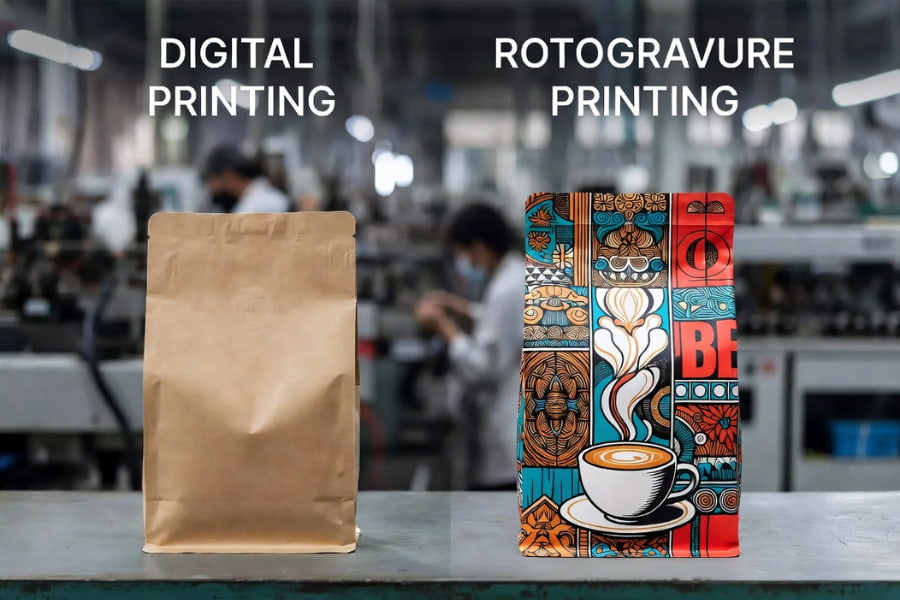
How long does custom coffee packaging take to produce?
Lead times depend on the printing method.
Digital printing typically requires 5 to 7 weeks.
Rotogravure printing usually takes 9 to 11 weeks.
Planning ahead and approving samples early helps avoid launch delays, especially during peak seasons.
Packaging design trends that help coffee brands stand out
Design plays a strategic role, but only when it supports usability and clarity.
What coffee packaging design trends matter in 2024?
Several trends are shaping brand differentiation.
Distinctive structures, including shaped pouches and alternative formats
Minimalist visual systems that prioritize legibility and reduce excess printing
Functional add-ons such as resealable zippers, degassing valves, and viewing windows
Strong design communicates quickly. It tells customers what the product is, how to use it, and why it fits their values.
How do brands balance visual appeal with real-world use?
Design must follow production realities. Files should meet print specifications, color systems must match the chosen process, and packaging should perform across retail, shipping, and storage environments.
The best designs solve operational problems first, then express brand personality.
Common coffee packaging questions consumers ask
Clear answers build trust and reduce friction.
Does coffee packaging expire?
Coffee does not spoil in the traditional sense, but flavor and aroma decline over time. Best-by dates indicate quality windows, not safety limits. These dates typically apply to the coffee itself, not the packaging material.
Can coffee bags be recycled?
It depends on material composition.
Paper, aluminum, and some plastics are recyclable, while multi-layer structures may require specialized handling. Compostable packaging must be processed under appropriate conditions to break down effectively. Clear disposal guidance helps consumers make the right choice.
How do coffee bags that work like tea bags get used?
They are designed for convenience.
Place the bag in a cup, add hot water, steep for two to three minutes, then remove. Each bag is single-use and suited for offices, travel, and quick preparation.
What coffee brands should do next in 2024
This year’s packaging decisions reward clarity over complexity.
The brands seeing the strongest results are those that prioritize freshness first, make sustainability understandable, and align cost decisions with growth plans rather than short-term trends.
At GAIA, we work with coffee brands navigating exactly these trade-offs, helping them test materials, select structures, and develop custom packaging that performs reliably without unnecessary risk.
Helpful resources and practical next steps
If you are evaluating coffee packaging changes, the next step is not to replace everything at once.
Start by identifying which factor matters most right now: freshness, sustainability, or cost control. Test one change, measure the impact, and adjust from there.
Packaging decisions compound over time. Making them intentionally in 2024 sets the foundation for stronger brand trust and better product performance moving forward.


