In the high-stakes world of specialty coffee, freshness is the currency of success. For coffee roasters and wholesalers, the question isn't just about how good the coffee tastes at the cooling tray, but how it performs weeks or months later when it reaches the consumer. The one-way degassing valve has revolutionized this journey.
But exactly how long does coffee stay fresh in valve bags? This comprehensive guide explores the science of degassing, the barrier properties of different materials, and the technical timelines every coffee professional needs to know to ensure their product remains at its peak.
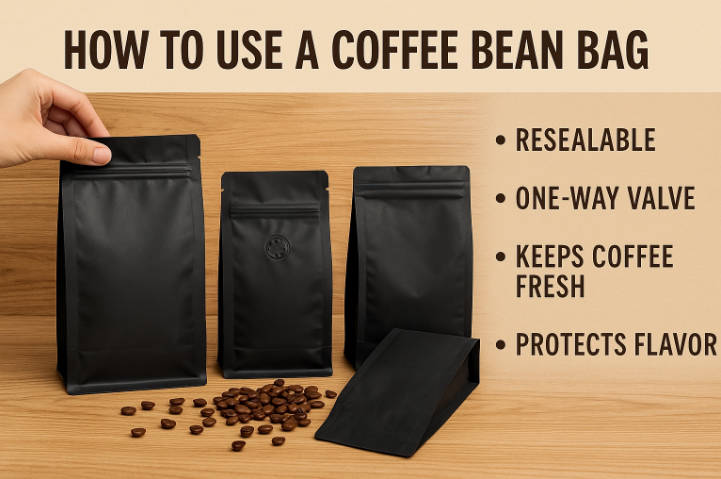
I. The Science of Freshness: Why Does Coffee Go Stale?
To understand how a valve bag works, we must first understand why coffee degrades. Coffee is a complex organic product containing over 1,000 aromatic compounds. Once the roasting process is complete, two primary enemies begin to attack these compounds: Oxidation and Degassing.
1. The Degassing Process
During roasting, coffee beans undergo intense heat, causing the formation of Carbon Dioxide ($CO_2$) within the cellular structure. A single gram of roasted coffee can release up to 10 milliliters of $CO_2$ over several days. If you seal fresh coffee in a bag without a valve, the accumulated gas will cause the bag to bloat and eventually burst.
2. Oxidation: The Flavor Killer
Oxidation occurs when oxygen comes into contact with the oils (lipids) and aromatic compounds in the coffee. This leads to rancidity and the loss of the "bright" notes that characterize high-quality specialty coffee. A one-way degassing valve is essential because it allows the high-pressure $CO_2$ to escape while maintaining a hermetic seal against outside oxygen.
II. How Long Does Coffee Stay Fresh in Valve Bags?
The short answer is that coffee stored in a high-barrier valve bag can maintain peak freshness for 4 to 8 weeks and remain commercially viable for 6 to 12 months, depending on whether it is whole bean or ground.
Whole Bean vs. Ground Coffee Longevity
The physical state of your coffee is the biggest variable in the "freshness clock."
Whole Bean Coffee: The cellular structure of a whole bean acts as its own protective chamber. When combined with a one-way valve, whole beans retain their volatile oils much longer. In a premium valve bag, whole bean coffee stays at its flavor peak for approximately 6 to 8 weeks.
Ground Coffee: Grinding increases the surface area of the coffee by hundreds of times, exposing it to rapid oxidation. Even with a valve, ground coffee loses its "sparkle" much faster. For ground coffee in valve bags, peak freshness is typically limited to 2 to 3 weeks.
Freshness Timeline Summary Table
| Coffee Type | Packaging Type | Peak Flavor Window | Commercial Shelf Life |
| Whole Bean | Valve Bag + Foil Barrier | 4–8 Weeks | 12 Months |
| Whole Bean | Valve Bag + Metalized Film | 3–6 Weeks | 9 Months |
| Ground Coffee | Valve Bag + Foil Barrier | 1–2 Weeks | 6 Months |
| Whole Bean | Kraft Paper (No Valve) | 3–7 Days | 1 Month |
III. The Role of Material Barriers in Shelf Life
A valve is only as effective as the material it is attached to. For B2B buyers selecting coffee bags with valves, understanding the "barrier layers" is critical.
1. Aluminum Foil Lamination (The Gold Standard)
Standard "foil-lined" bags offer the lowest Oxygen Transmission Rate (OTR). If you are looking for a shelf life of 12 months, this is the only viable option. It provides a 100% barrier against light, moisture, and oxygen.
2. Metalized Film (VMPET)
Metalized films (like Mylar) are lighter and more cost-effective. While they offer excellent protection, they are slightly more permeable than pure aluminum. This is ideal for coffee intended for high-turnover retail environments (3–6 month shelf life).
3. Sustainable and Recyclable Barriers
Modern innovations have led to high-barrier PE/PE recyclable bags and compostable options. While historically these had shorter shelf lives, recent advancements allow eco-friendly coffee bags with valves to maintain freshness for up to 6 months, making them a competitive choice for "green" brands.
IV. Why the One-Way Degassing Valve is Non-Negotiable
For the professional roaster, the valve serves three distinct purposes that directly impact the bottom line:
Immediate Packaging: Without a valve, roasters must wait 24–72 hours for coffee to "off-gas" before bagging. With a valve, coffee can be bagged immediately after cooling, locking in the aromatics that would otherwise be lost to the air.
Structural Integrity: The primary function of a coffee valve bag is to prevent the package from bursting during transit or on the shelf while keeping oxygen out.
Consumer Experience: The "valve sniff" is a part of the consumer buying process. A high-quality valve allows the consumer to smell the aroma without compromising the seal.
V. Factors That Can Compromise Your Valve Bag’s Performance
Even the best coffee shelf life valve bag can fail if environmental factors are not managed.
1. Temperature and Light
Heat accelerates chemical reactions. If a valve bag is stored in a direct sunlit window or a hot warehouse, the oils in the coffee will oxidize even if oxygen is excluded. Always use opaque bags (foil or metalized) to block UV rays which degrade coffee lipids.
2. Seal Quality
A valve is a point of entry if not heat-sealed correctly. Industrial roasters must ensure that the heat sealer is calibrated to the specific thickness of the bag (e.g., 120 microns to 150 microns) to ensure a 100% airtight seal around the valve and the top zipper.
3. Valve Placement and Quality
Not all valves are created equal. High-end valves (like those from Wipf or Goglio) have more consistent opening pressures. If a valve is too "loose," it may let oxygen in; if too "tight," the bag will swell before it opens.
VI. FAQ
How do I know if the valve is working?
You can test if a coffee valve is working by gently squeezing a sealed bag; you should hear a faint "hiss" as gas escapes, and the bag should immediately stop expanding once you release the pressure. If the bag remains bloated for days, the valve may be clogged or defective.
Can I store valve bags in the freezer?
While the valve bag protects against moisture, freezing is generally discouraged for retail packaging because the valve can become brittle or "stuck" due to condensation, potentially allowing moisture to enter the bag when it thaws.
Is there a difference between internal and external valves?
Internal valves are hidden under the laminate and are more aesthetically pleasing for premium brands. External valves are visible on the surface. Functionally, both serve the same purpose, but internal valves are less likely to be damaged during shipping.
VII. Conclusion: Choosing the Right Packaging for Your Brand
To maximize the coffee shelf life in valve bags, roasters must balance material science with logistical reality. If your business model focuses on local, weekly deliveries, a metalized or recyclable bag with a valve is sufficient. However, if you are shipping internationally or stocking grocery shelves with a long lead time, an aluminum foil laminate with a high-performance one-way valve is essential.
Investing in quality coffee bags with valves is not just a packaging choice—it is a commitment to your coffee's flavor and your brand's reputation.


