For coffee lovers, choosing the right coffee bean bag is just as important as selecting coffee beans—— A good coffee bean bag can lock in the coffee's aroma and slow down the loss of its flavor, while a poor choice may cause high-quality coffee beans to "deteriorate". A coffee bean bag is not just a simple "container", but the "first line of defense" for preserving the coffee's flavor.
Do you often feel confused and unsure how to choose when picking a coffee bean bag? The following seven key dimensions will help you accurately find a coffee bean bag that suits your needs:
1.Material: Choose the Right Basic Type Based on the "Freshness Preservation Logic"
2.One-Way Valve: The "Lifesaver Valve" for Freshly Roasted Beans"
3.Sealability: The "Core Indicator" for Reuse"
4.Capacity: The "Key Step" to Avoid Waste"
5.Light Protection: The "Invisible Defense Line" for Preserving Flavor"
6.Portability: The "Bonus Feature" for Scenario-Based Selection"
7.Manufacturer: Choose the Right One Based on "Compliance and Durability"
I.Material: Choose the right basic type based on the "freshness preservation logic"
Currently, the materials of coffee bean packaging bags on the market are mainly divided into aluminum foil composite material, kraft paper composite material, and aluminum-plated film material. Each type of material has its own focus in terms of structural design and freshness preservation ability, so selection should be based on usage needs.
Aluminum Foil Composite Material: The "All-Round Performer" in Freshness Preservation
Aluminum foil composite material is the "preferred material" for mid-to-high-end coffee bean packaging. Its core advantage lies in "extreme barrier performance," which can comprehensively resist the damage to coffee beans caused by oxygen, light, and moisture. Its common structure is a three-layer composite design of "outer protective layer + middle aluminum foil layer + inner sealing layer."。
Outer Layer: Mostly made of nylon (PA) or polyester (PET), with a thickness of 15-25μm. It is responsible for puncture resistance and wear resistance to prevent the bag from being damaged during transportation or storage. The nylon outer layer has stronger tensile resistance, making it suitable for scenarios where the bag is carried frequently; the polyester outer layer has high hardness and clear printing effect, which is suitable for packaging that needs to highlight brand design.
Middle Layer: Food-grade aluminum foil (AL), with a thickness of 7-9μm, acts as the "core barrier" for freshness preservation—it blocks 100% of light (especially ultraviolet rays, which accelerate the oxidation of coffee beans) and isolates over 99% of oxygen at the same time, preventing the beans from losing flavor due to oxidation. Experimental data shows that the oxygen transmission rate of aluminum foil composite material is only 0.1cc/m²·24h, far lower than that of other materials.
Inner Layer: Polyethylene (PE), with a thickness of 20-30μm, must meet food-grade standards (such as FDA certification). It has excellent heat-sealing performance to ensure the bag mouth is tightly sealed, while also providing moisture resistance and preventing coffee beans from being scratched into powder.
All-Dimensional Barrier: It integrates light resistance, oxygen insulation, and moisture resistance. It can extend the freshness period of light-roasted beans to more than 3 weeks and that of dark-roasted beans to 1-3 months.
Wide Adaptability: It is competent for all types of roasted beans—whether light-roasted, medium-roasted, or dark-roasted—and suitable for both short-term turnover and long-term storage.
Strong Durability: The outer layer made of nylon/polyester is resistant to drops and wear. Even when dropped 5 times from a height of 1 meter, there is no obvious damage, making it suitable for long-term use in commercial settings or households.
Kraft Paper Composite Material: The "Balanced Option" for Aesthetics and Practicality
Kraft paper composite material has become the "aesthetic highlight" of specialty coffee thanks to its retro and natural texture. Its core advantages lie in "controllable breathability + visual expression", and its common structure is "outer kraft paper layer + middle functional layer + inner sealing layer", which balances texture with basic freshness preservation.
Outer Layer: Food-grade kraft paper, with a basis weight of 80-120g/㎡, divided into yellow kraft paper and white card kraft paper. Yellow kraft paper has a natural fiber texture, highlighting its original texture; white card kraft paper is pure and elegant, suitable for matching with matte finishes to showcase high-end designs. The outer kraft paper layer not only contributes to the appearance but also provides basic protection. High-quality kraft paper is fold-resistant and tear-resistant, preventing bag damage caused by minor impacts.
Middle Layer: Classified into two types based on freshness preservation needs — the basic type features a polyethylene (PE) coating (thickness: 15-20μm), which solves the problem of pure kraft paper absorbing moisture, with a moisture vapor transmission rate controlled below 5g/m²·24h; the high-end type adds a thin aluminum foil or aluminum-plated layer to improve oxygen barrier performance, reducing the oxygen transmission rate to below 3cc/m²·24h, balancing texture with long-term freshness preservation.
Inner Layer: Food-grade PE film, with a thickness of 20-30μm, ensuring tight sealing while preventing coffee beans from being scratched into powder. It must be odorless and comply with food contact standards.
Outstanding Aesthetics: The natural texture of kraft paper inherently exudes a premium feel. When paired with water-based ink printing, it can highlight the brand's tone, making it suitable for specialty coffee or gift packaging.
Controllable Breathability: Basic kraft paper composite bags without aluminum foil retain slight breathability, allowing coffee beans to release carbon dioxide slowly and preventing "stuffy odors". They are suitable for beans that have been roasted for more than 2 weeks and have completed degassing.
High Cost-Effectiveness: Their price is 30% lower than that of aluminum foil composite materials, making them ideal for scenarios where coffee is consumed in the short term or aesthetic needs are a priority.
Aluminum-Plated Film Material: The "Affordable Alternative" to Aluminum Foil Material
Aluminum-plated film material is often mistaken for aluminum foil material, but in fact, the differences between them are significant—it is made by coating an extremely thin aluminum layer (only 1/100 the thickness of aluminum foil) on the surface of a PET film. Its core advantage lies in "cost-effectiveness," making it suitable for scenarios where budget is limited but basic freshness preservation is required. Its common structure is "PET aluminum-plated layer + PE inner layer."
Outer Layer: PET aluminum-plated layer, with a thickness of 12-15μm. An aluminum layer is formed on the surface of the PET film through vacuum coating technology, which can provide basic light-shielding and oxygen-blocking effects. However, the aluminum layer is thin and prone to wear.
Inner Layer: Food-grade PE film, with a thickness of 20-25μm. It ensures sealing and moisture resistance, functioning similarly to the inner layer of aluminum foil composite material. Nevertheless, it is slightly thinner and has somewhat weaker moisture resistance.
Low Cost: Its price is 40% lower than that of aluminum foil composite material and 10%-20% higher than that of kraft paper composite material, making it suitable for entry-level coffee bean packaging with limited budgets.
Lightweight and Portable: The material is softer than aluminum foil and does not easily leave creases after folding, making it ideal for occasionally carrying a small amount of coffee beans (e.g., 100-200g) when going out.
In conclusion, choosing the material for coffee bean packaging is essentially "selecting a suitable 'protective cover' for the coffee beans." Only by choosing the right material can the fresh and vivid flavor of the coffee beans be preserved, allowing you to taste the optimal flavor of freshly roasted coffee in every cup.
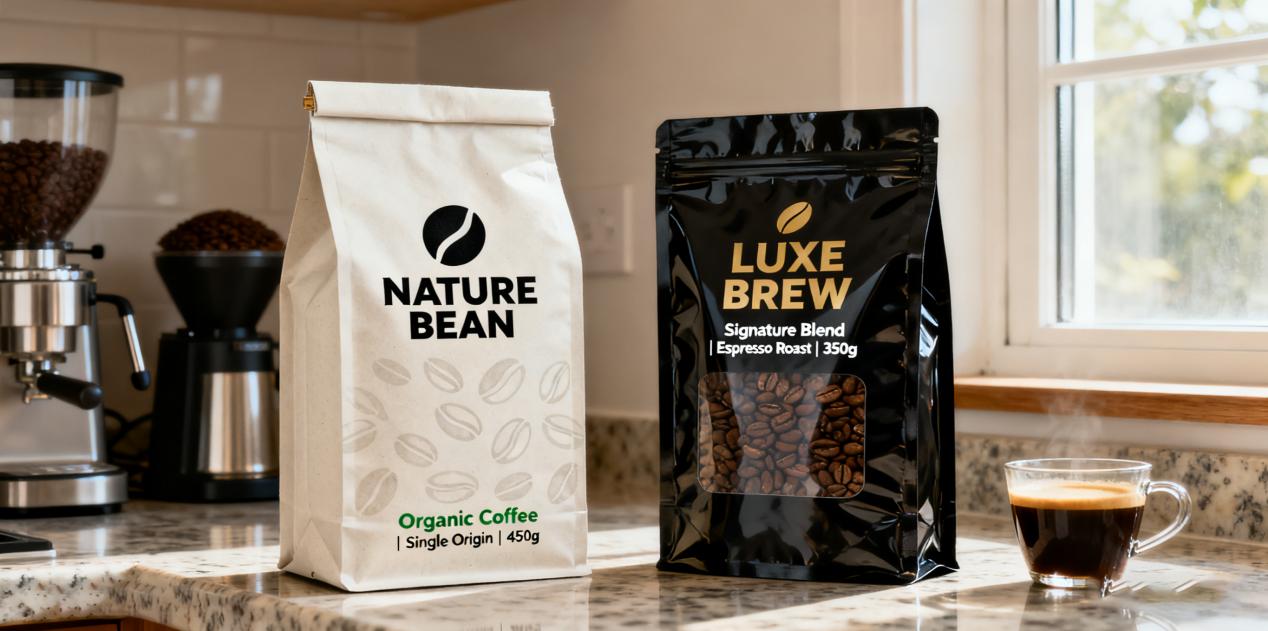
II.One-Way Valve: The "Lifesaver Valve" for Freshly Roasted Coffee Beans
The core principle of a one-way valve lies in "pressure difference control + one-way sealing," which enables the one-way flow of gas through a simple yet precise structure
Degassing Trigger: Fresh coffee beans release carbon dioxide, causing the air pressure inside the bag to rise to 0.1-0.3 bar (the threshold varies for different valve types). The pressure difference pushes the inner diaphragm or cover of the valve open, and gas is discharged along a preset channel until the air pressure inside the bag drops to a safe range.
Sealing Block: After degassing, the air pressure inside the bag decreases. The diaphragm/cover resets under its own elasticity or gravity, fitting tightly against the valve seat to form a sealed barrier that prevents external oxygen and moisture from entering.
Taking the common diaphragm valve as an example: the valve seat is equipped with an annular sealing groove, and the diaphragm covers the groove opening. During degassing, the edge of the diaphragm lifts, allowing gas to escape through the gap; after degassing, the diaphragm resets and presses tightly against the sealing groove, achieving "zero reverse air leakage" (the reverse leakage rate of high-quality valves is less than 0.01%).
Based on differences in structure and material, one-way valves are mainly categorized into three types, each with its own suitable application scenarios and performance focuses:
Rubber Diaphragm Valve: The "Cost-Effective Choice" for Basic Use"
Structure: Plastic valve seat + natural rubber diaphragm. The diaphragm thickness is 0.3-0.5mm, and it resets by virtue of rubber elasticity.
Performance Features: Low degassing threshold (0.1-0.15bar), suitable for medium-roasted and dark-roasted beans with moderate degassing volume (degassing period of about 1 week); cost is only 1/3 of that of silicone valves, but it has poor temperature resistance (-5-30℃)—it tends to soften and leak air at high temperatures and harden and jam at low temperatures, with a service life of approximately 1-2 months.
Suitable Scenarios: Short-term packaging for entry-level coffee beans (1-2 weeks of storage) and bulk packaging with limited budgets. It is not recommended for light-roasted beans or environments with extreme temperature and humidity.
Silicone Diaphragm Valve: The "Performance Mainstay" for Advanced Use
Structure: Food-grade silicone diaphragm (thickness 0.2-0.4mm) + high-strength plastic valve seat. The elasticity of silicone is 3 times that of rubber, and it is resistant to aging.
Performance Features: Stable degassing threshold (0.1-0.2bar), suitable for all types of beans (light-roasted, medium-roasted, and dark-roasted); wide temperature resistance range (-20-80℃), enabling normal operation even in summer exposure or winter refrigeration; reverse leakage rate is less than 0.05%, with a service life of up to 3-6 months.
Suitable Scenarios: Packaging for mid-to-high-end specialty coffee beans (especially light-roasted beans with a degassing period of 1-2 weeks) and for long-term storage needs (2-4 weeks). It is currently the mainstream choice in the market.
Metal Cover Valve: The "Ultimate Sealing Choice" for High-End Use
Structure: Aluminum alloy/stainless steel cover (weight 1-2g) + silicone sealing ring + plastic valve seat. It achieves double sealing through the gravity of the cover and the sealing ring.
Performance Features: Higher degassing threshold (0.2-0.3bar), suitable for light-roasted beans with large degassing volume (such as Geisha and Yirgacheffe). It can slow down the degassing speed and reduce the loss of aroma with gas; reverse leakage rate is nearly 0, temperature resistance range is -30-100℃, and service life is as long as 6-12 months.
Suitable Scenarios: High-end limited-edition coffee beans and precious beans that require long-term display or storage (1-3 months). Its cost is 3-4 times that of silicone valves, and it is mostly used in the high-end product lines of specialty coffee brands.
Low-quality one-way valves can directly cause coffee beans to deteriorate. When purchasing, you need to focus on three core indicators::
Seal Test: Inflate an empty bag with the valve and seal it, then let it stand for 12 hours. If the bag remains fully inflated, it indicates good sealing; if it deflates, there is reverse air leakage, and such valves should be rejected outright.
Diaphragm/Cover Quality:For rubber valves: Check the diaphragm elasticity (it should rebound quickly after being pressed, with no white spots or cracks);For silicone valves: Examine the diaphragm texture (it should have a smooth surface, no burrs, and no pungent odor);For metal valves: Inspect the cover flatness (no deformation or scratches, and the sealing ring should not fall off).
Compatibility Check: Select the valve based on the coffee bean roast level and storage duration — do not choose rubber valves for light-roasted beans that require long-term storage; for dark-roasted beans with short-term storage needs, there is no need to opt for metal valves to avoid performance waste.
Although a one-way valve is small, it serves as the "gatekeeper of coffee bean freshness." Only by selecting the right type and conducting proper screening can it truly fulfill its function of "allowing gas to escape without letting air in" and preserve the fresh, vibrant flavor of every coffee bean.
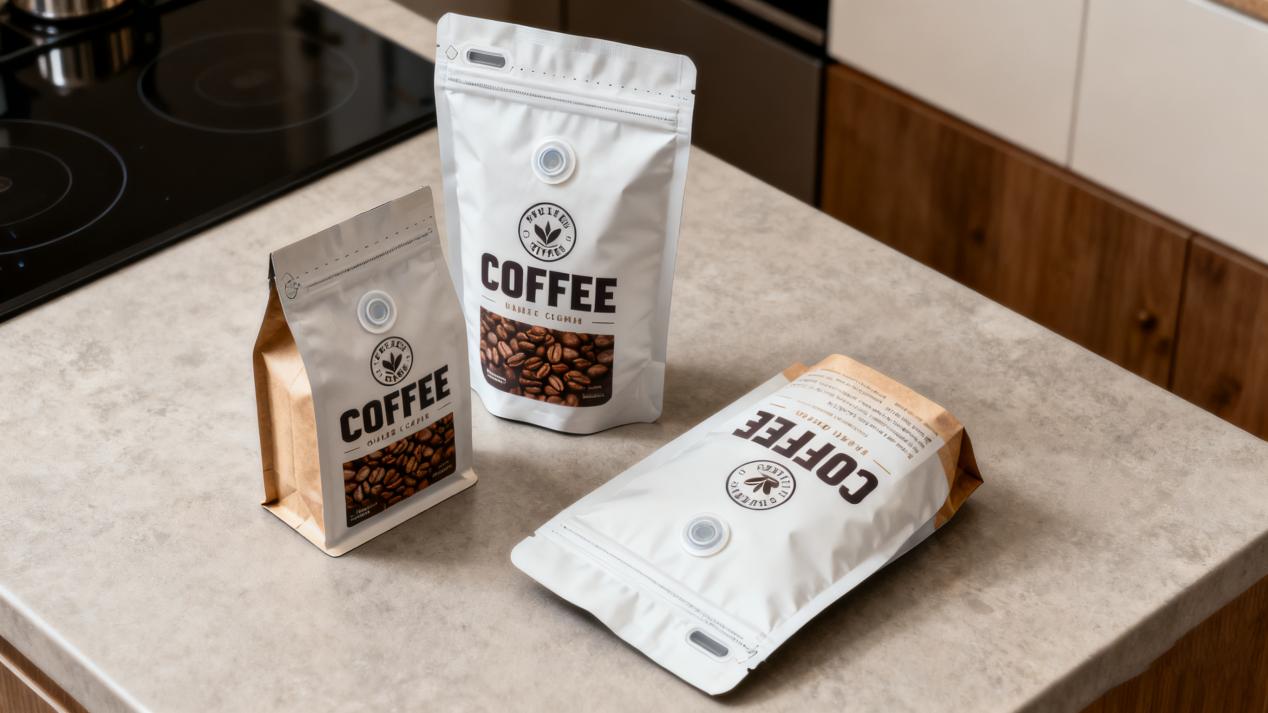
III.Sealability: The "Core Indicator" for Reusable Use
In the "freshness preservation chain" of coffee bean storage, sealability is the most easily overlooked yet crucial link. As the "last line of defense" to lock in freshness, common sealing methods are as follows:
Zipper Sealing: The "Cost-Effective Choice" for Daily Home Use
Structural Principle: Composed of a plastic zipper (usually made of PE material) and the edge of the bag opening, it achieves sealing through the engagement of zipper teeth. Some high-end models are equipped with a "sealing strip" on the inner side of the zipper to enhance barrier performance.
Convenient Operation: No tools are needed for opening and closing, and it can be done with one hand, making it suitable for daily scenarios where coffee beans are frequently taken out at home.
Strong Durability: A high-quality zipper can be opened and closed repeatedly for more than 50 times while still maintaining good sealability. The zipper-type aluminum foil bag from Gaia Packaging used in my home is opened and closed about 20 times a month, and there is still no obvious air leakage after 3 months.
Wide Compatibility: It can be matched with zipper sealing regardless of whether it is an aluminum foil composite bag, a kraft paper composite bag, or an aluminum-plated bag. It is currently the mainstream choice for home use scenarios.
Ziplock Sealing: The "Lightweight Choice" for Short-Term Subpackaging
Structural Principle: Composed of a plastic zipper lock (made of PP material) and the bag opening, it achieves sealing by pressing the zipper lock to make the plastic sheets on both sides fit tightly. It is commonly used in small-capacity subpackaging bags (100-150g).
Low Cost: Its price is only 1/3 of that of zipper sealing, making it suitable as a subpackaging and sealing method for large-packaged coffee beans.
Lightweight and Portable: The bag opening with ziplock sealing is relatively thin and takes up no space when folded, making it suitable for portable scenarios such as business trips and camping.
Sealing Strip + Buckle: The "Ultimate Solution" for Large-Capacity Storage
Structural Principle: Composed of a food-grade silicone sealing strip (inner layer) and plastic buckles (outer layer), the sealing strip is embedded in the groove of the bag opening. The buckles press the bag opening tightly through mechanical pressure to form a "double seal". This structure is commonly used in large-capacity commercial packaging bags (454g and above).
Ultimate Sealability: The compression rate of the silicone sealing strip can reach 30%, which can completely fill the gaps at the bag opening. The oxygen transmission rate can be as low as 0.05cc/m²·24h or less, making it the sealing method with the strongest performance currently available.
High Stability: The buckle design can prevent the sealing strip from shifting due to repeated opening and closing, making it suitable for commercial scenarios where frequent access is required (such as cafes). A cafe owner I know reported that with bags using this sealing method, even if opened and closed 10 times a day, there is still no significant decline in sealability after one month.
Heat-Seal Sealing: The "Basic Choice" for Disposable Packaging
It achieves sealing by heating the PE inner layer at the bag opening to a high temperature, which melts and bonds the plastic. This method is commonly used in disposable coffee bean bags (such as some sample packs and small portions of specialty bean bags).
Good Initial Sealability: The heat-sealed bag opening has no gaps, and its initial oxygen transmission rate is comparable to that of the "sealing strip + buckle" method.
Controllable Cost: It is suitable for mass-produced disposable packaging and does not require additional components such as zippers or zipper locks.
Sealability is the bottom line of a coffee bean bag’s "freshness preservation capability." Only by attaching importance to and selecting the right sealing method can other designs—such as material, capacity, and exhaust valve—truly play their roles, allowing every coffee bean to release its flavor in the best condition.
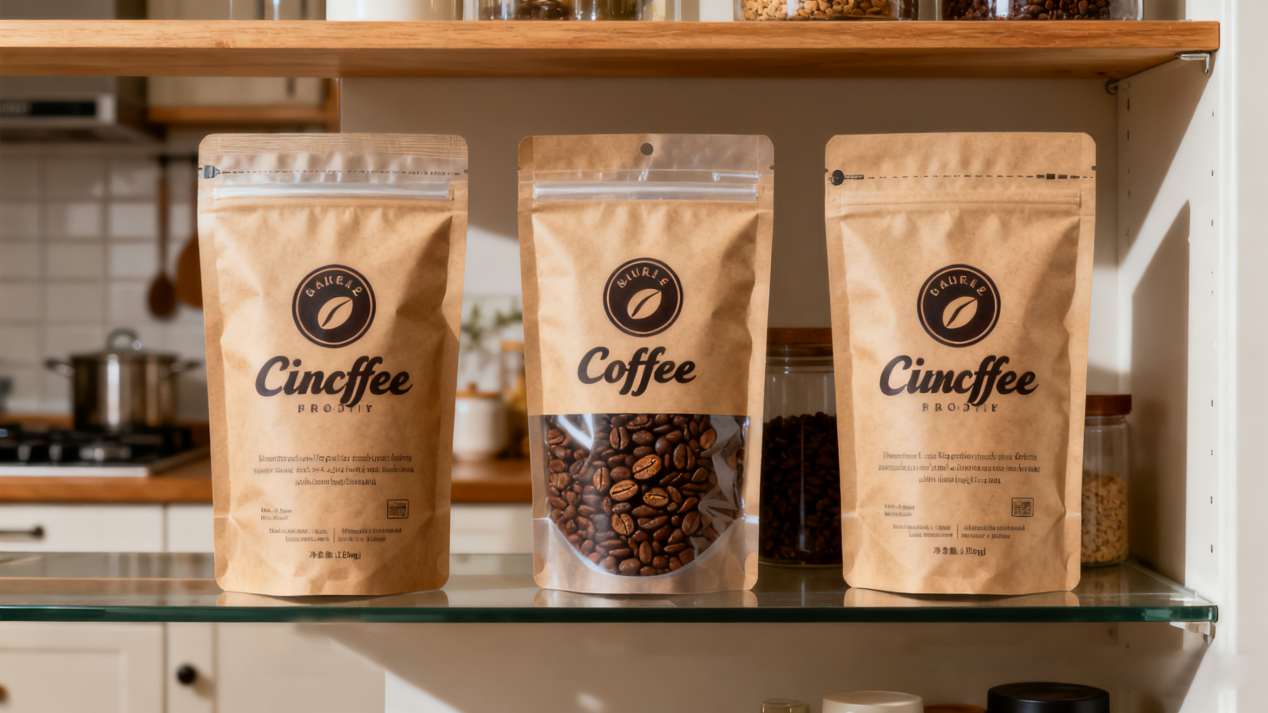
IV. Capacity: The "Key Step" to Avoid Waste
In coffee bean storage, the capacity of the packaging bag is often overlooked, yet it directly affects flavor retention — an excessively large capacity can easily lead to repeated exposure of the beans to air and subsequent oxidation, while an excessively small capacity requires frequent purchases, disrupting the consistency of consumption. Below, we break down the core logic of capacity selection from two dimensions: the relationship between capacity and freshness preservation, scenario-specific adaptation, and pitfalls to avoid.
The Core Connection Between Capacity and Freshness Preservation: Why Is "Compatibility" More Important Than "Cost-Effectiveness"?
After coffee beans are opened, their flavor loss accelerates due to continuous exposure to oxygen and light. Experimental data shows that once opened, coffee beans lose approximately 5%-8% of their flavor every day, and the flavor retention rate drops to less than 50% after 2 weeks. The key to choosing the right capacity lies in "controlling the amount of beans exposed after each opening" to shorten the consumption cycle and reduce flavor waste.。
Problems with oversized capacity: If you purchase a 454g (1-pound) package and consume 1 cup (15g) per day alone, it will take 30 days to finish. By then, the beans consumed in the last 10 days will have lost their freshness, leaving only bitterness and astringency. Additionally, repeated opening of the package causes the oxygen concentration inside to rise continuously, accelerating oxidation.
Problems with undersized capacity: If you choose a 100g (about 1/4-pound) package and consume 2 cups (30g) per day alone, you will need to open a new package every 3 days. This not only brings the hassle of frequent reorders but may also disrupt the consistency of your drinking experience due to flavor differences between beans from different batches.
Mainstream Capacity Specifications and Scenario-Specific Adaptation: Precise Matching of Needs from Individual Use to Commercial Use
Currently, the capacities of coffee bean bags available on the market are mainly divided into three categories: small capacity (50-150g), medium capacity (227-340g), and large capacity (454-1000g). Each category has clear applicable scenarios, and the selection needs to be made comprehensively based on the number of people drinking, frequency of consumption, and storage conditions.
Small Capacity (50-150g): The "Flexible Choice" for Portability and Taste Testing
Common specifications: 50g (sample pack), 100g (portable pack), 150g (short-term pack for small households);
Core advantage: After opening, the beans can be finished within 3-7 days, which maximizes the retention of the beans' "peak flavor".
Usage tips: Most small-capacity bags come with simple sealing (such as ziplock sealing). After opening, they should be consumed as soon as possible, and long-term storage is not recommended. Additionally, their unit price is relatively high, making them unsuitable for daily regular consumption scenarios.
Medium Capacity (227-340g): The "Golden Specification" for Daily Use in Households and by Individuals
Common specifications: 227g (1/2 pound), 340g (3/4 pound), which are the mainstream capacities on the market currently;
Core advantages: It balances "freshness retention period" and "consumption consistency", with a moderate unit price, making it suitable for regular daily consumption.
Usage tips: If you are worried about not finishing the beans, after opening the medium-capacity bag, you can immediately repack the beans into small-capacity sealed bags (e.g., 100g bags), vacuum-seal them, and store them in a cool place. This can extend the freshness retention period by 3-5 days.
Large Capacity (454-1000g): The "Specialized Choice" for Commercial Use and Bulk Stockpiling
Common specifications: 454g (1 pound), 500g, 1000g (2.2 pounds), mostly designed for commercial scenarios or bulk stockpiling;
Core advantage: It has the lowest unit price, making it suitable for scenarios where one regularly consumes coffee beans of a specific brand and flavor over the long term, as it can reduce long-term procurement costs;
Precautions: Individuals without professional storage conditions are not recommended to purchase the 1000g package. Even if repackaged, repeated opening will still cause flavor loss; moreover, most large-capacity bags are made of thick aluminum foil, which has poor portability and is not suitable for carrying outside.
Capacity selection is the "first step" in preserving the freshness of coffee beans. Only by matching the capacity to the consumption speed can other packaging designs such as material and exhaust valve truly play their roles, allowing you to taste the fresh, lively flavor of the beans just after roasting in every sip of coffee.
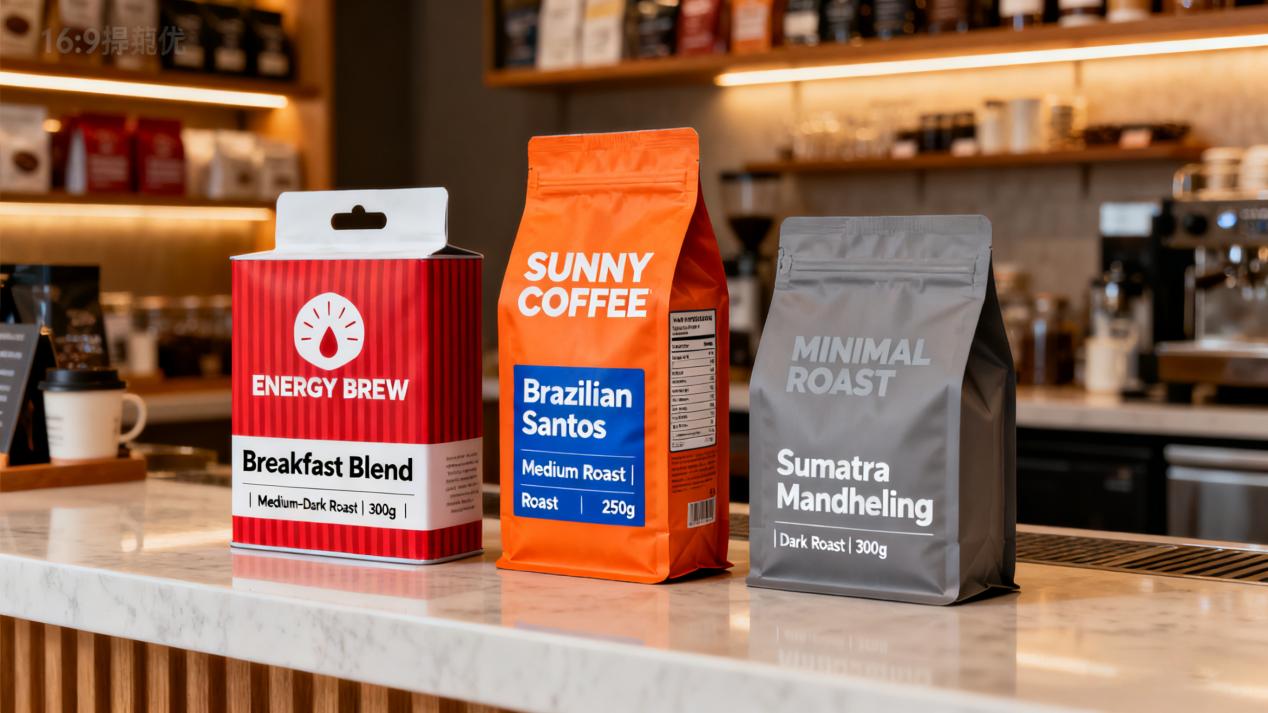
V. Light Protection: The "Invisible Defense" for Preserving Flavor
Light accelerates the oxidation of coffee beans; ultraviolet (UV) light, in particular, destroys the flavor compounds in the beans, leaving the coffee tasting "bland." Many people don’t realize that transparent coffee bean packaging is actually a "flavor killer."
I conducted a small experiment: I stored the same type of coffee beans in a transparent plastic bag and an aluminum foil bag respectively, placing both in the same environment. After 3 days, I brewed and compared the coffee— the beans in the transparent bag had a noticeably weaker sweet and sour taste, while the flavor of the beans in the aluminum foil bag remained almost unchanged.
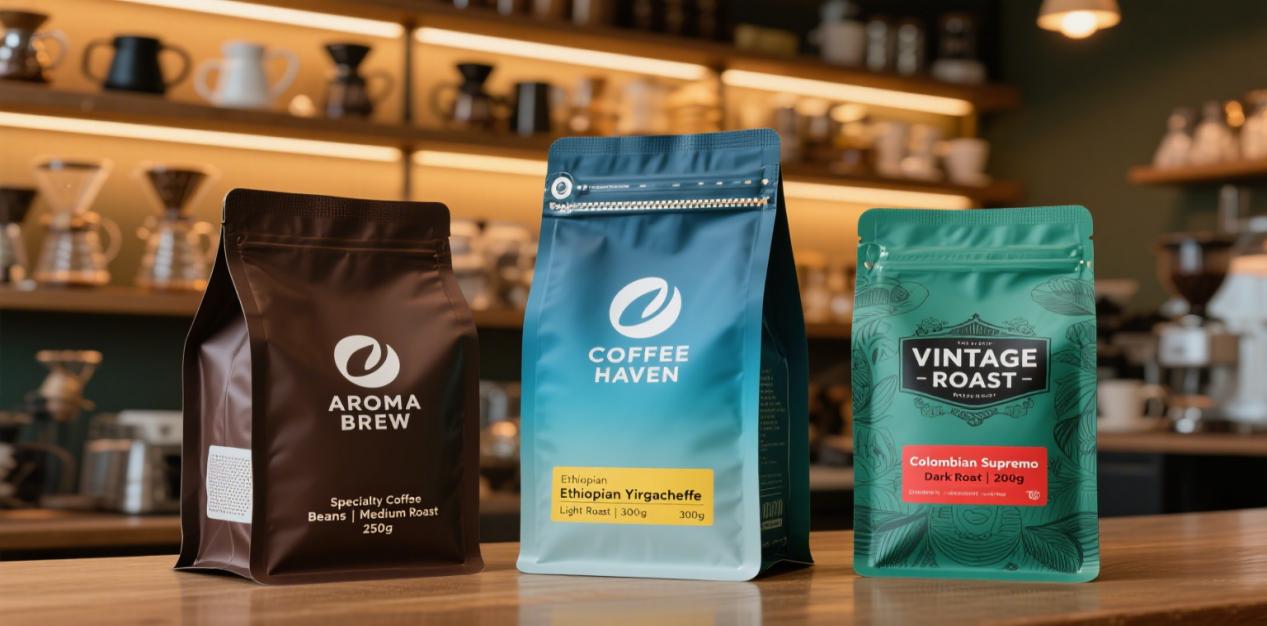
When choosing coffee bean packaging, remember this: prioritize opaque bags, such as pure aluminum foil bags or kraft paper composite bags. If a bean bag has a "window design" (e.g., a transparent section left on the bag), check whether the window area has a "light-blocking coating"— shine your phone’s flashlight on it; you should see the light reflected rather than penetrating through. Avoid fully transparent plastic bags, as they can affect the flavor even for short-term use.
VI. Portability: The "Bonus Feature" for Scenario-Specific Selection
In addition to storing coffee beans at home, many people also carry them when going out—such as during business trips or camping—and portability becomes crucial in these cases.
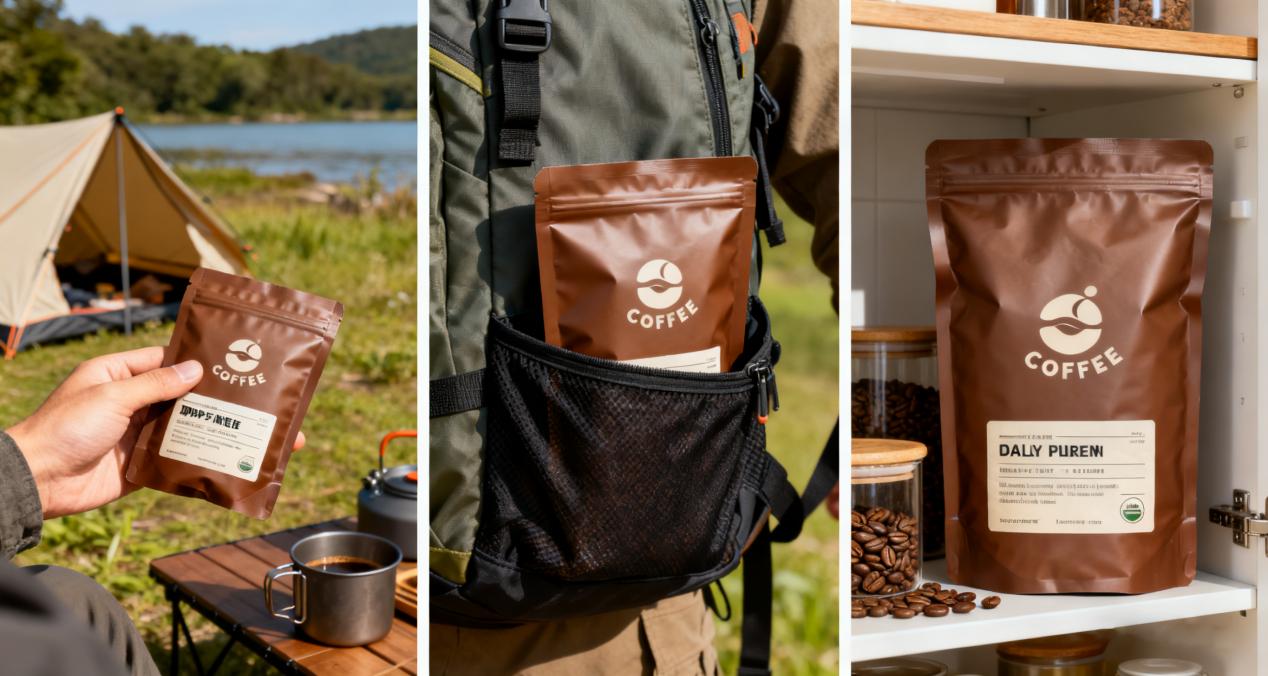
Business Trips / Camping: Choose Small-Capacity Zipper Bags or Styles with Handles
For business trips, you can bring a small-capacity zipper bag of about 100g. It is roughly the size of a mobile phone and can fit easily into a backpack. If you are camping, bean bags with handles are more convenient—you can hang them on the tent for easy access, without worrying about getting them dirty.
Daily Commuting: Prioritize "Easy-to-Open" Designs
Some coffee bean bags have a "tear tab" design, which can be opened without scissors—this is especially suitable for mornings when you’re in a hurry. A colleague of mine often brings this type of coffee bean bag; when they get to the office, they just tear open the seal and can brew the coffee directly with a pour-over kettle.
Home Use: Portability Can Be Compromised Appropriately
If you mainly store coffee beans at home, you don’t need to pay too much attention to portability. The focus should be on sealability and freshness retention. For example, although aluminum foil composite bags are a bit heavier, they have a good freshness preservation effect and are very suitable for home use.
VII. Manufacturers: Choosing the Right Manufacturer Based on "Compliance and Durability"
Choosing the right manufacturer for coffee bean packaging is more important than choosing the packaging itself — high-quality manufacturers can provide compliant and durable packaging, while inferior ones may ruin good coffee beans due to substandard materials. Based on industry experience, these three key points should be the focus of attention.
Qualifications and Compliance: The First Line of Defense for Health
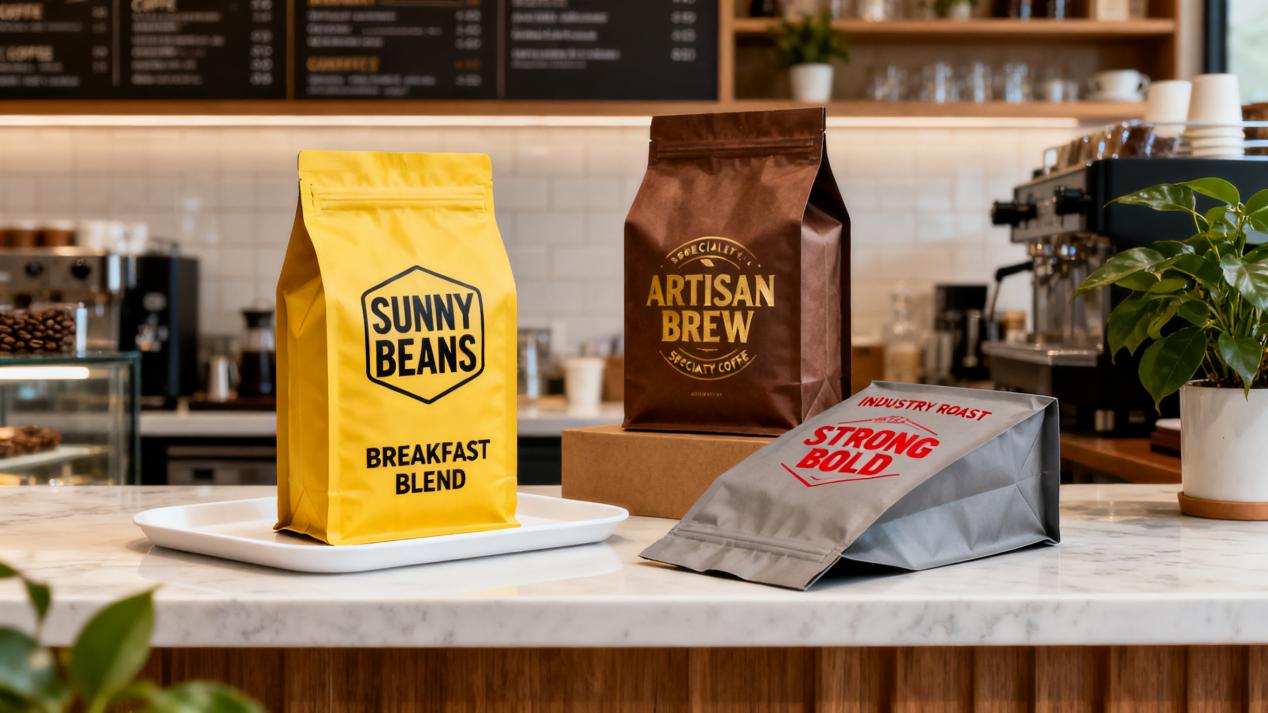
Prioritize manufacturers with food-grade certifications (such as FDA and LFGB) and environmental certifications (such as biodegradable material certifications) to avoid purchasing bags made from recycled materials. A friend of mine once chose Gaia Packaging, which not only ensured quality but also enhanced the aesthetic appeal of their brand.
Gaia Packaging focuses on the wholesale, retail, and customization of various packaging bag-related products. Its product range is extremely rich, capable of meeting the one-stop procurement needs of customers in different industries. Furthermore, it provides high-end customized packaging solutions that perfectly align with brand requirements.
Customization Capability: Enhancing the "Aesthetic Representative" of Your Brand
If you own a coffee brand, you need to confirm whether your coffee bean packaging supplier can provide customized materials (such as aluminum foil composite, kraft paper composite), printing (brand logos, roasting information), and functions (one-way valves, sealing methods) according to your needs. Small manufacturers often fail to accurately meet requirements due to limited equipment—for example, blurry printed text or misaligned installation of one-way valves.
After-Sales Service and Quality Control: Guarding Every Checkpoint for Your Own Brand
Reliable coffee bean packaging suppliers will provide sample testing and comprehensive after-sales service—if issues such as poor sealing or malfunctioning one-way valves occur, they can promptly reissue products or provide compensation. In contrast, small workshop-style manufacturers usually offer no after-sales support, leaving you with no recourse but to bear the loss when problems arise.
Finally: "Balance and Compromise" Based on Needs
When choosing a coffee bean bag, there is no "absolutely best" option—only "relatively suitable" ones. For example:
If you are a beginner with a limited budget, a "zipper-sealed kraft paper composite bag" is more than enough, as it balances aesthetic appeal and practicality;
If you are an experienced enthusiast pursuing ultimate freshness, a combination of "aluminum foil composite bag + sealing strip + buckle + one-way valve" is more suitable;
If you often go out, a small-capacity zippered coffee bean bag will be an excellent choice for you.
Remember, a good coffee bean bag can "add brilliance to the splendor" of high-quality beans' flavor. Master these seven key points, and you can easily choose a bean bag that suits you, ensuring every cup of coffee delivers the best taste.


