I. Introduction
For any coffee business, from a boutique roastery to a large-scale distributor, the choice of Coffee Packaging Bags is paramount. It's far more than just a container; it's the guardian of freshness, a powerful branding tool, and a crucial statement about your brand's values. The right packaging protects your precious beans from their natural enemies – oxygen, moisture, light, and heat – preserving the intricate flavors and aromas meticulously developed during roasting. Simultaneously, it serves as your brand’s first handshake with the customer, influencing purchase decisions and shaping perceptions.
In today's dynamic market, a central dilemma for many coffee brands revolves around a fundamental choice: Paper Coffee Packaging Bags versus Plastic Coffee Packaging Bags. Both materials offer distinct advantages and disadvantages, pushing businesses to weigh factors such as product preservation, environmental impact, cost efficiency, aesthetic appeal, and functional versatility. This comprehensive guide aims to unpack this complex decision, providing detailed insights into each option so you can make an informed choice that best suits your coffee, your brand, and your customers. We'll explore the science of coffee preservation, deep dive into the properties of both plastic and paper, outline key considerations for your business, and touch upon the exciting future of sustainable packaging.
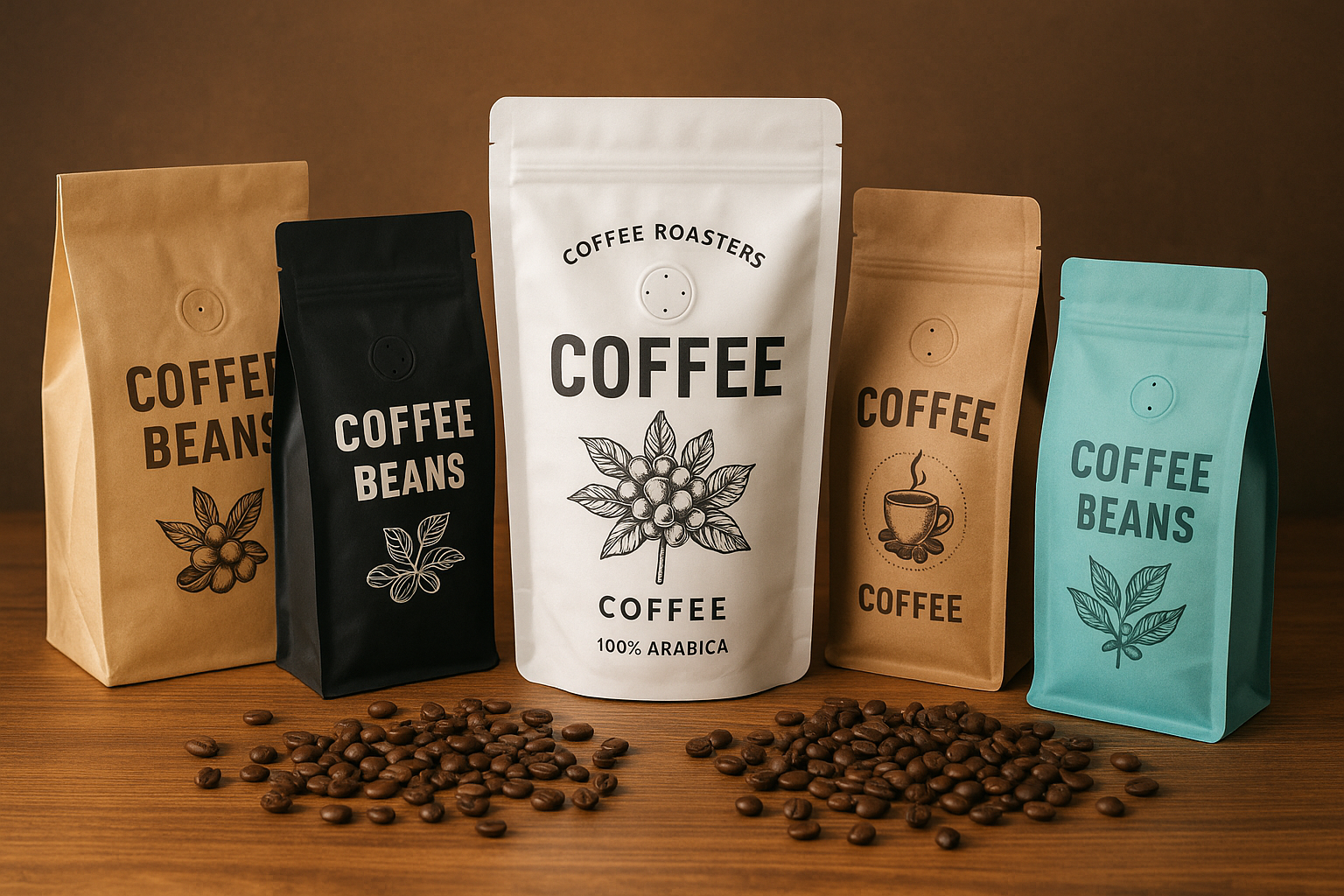
II. Understanding Coffee Preservation Needs
To truly appreciate the importance of your Coffee Packaging Bags, it’s essential to understand what coffee needs protection from. Coffee freshness is a delicate balance, constantly under threat from four primary environmental factors:
Oxygen (Oxidation): This is coffee's biggest enemy. Exposure to oxygen causes oxidation of the volatile compounds that give coffee its rich flavor and aroma. This process leads to staleness, bitterness, and a flat taste. Degassing (the release of CO2 after roasting) also occurs, and without a one-way valve, this can cause bags to burst or allow oxygen in.
Moisture (Humidity): Coffee beans are hygroscopic, meaning they readily absorb moisture from the air. Excess moisture can accelerate staling, promote mold growth, and dilute flavors.
Light (UV Radiation): Ultraviolet (UV) light can degrade fats and oils in coffee, leading to rancidity and off-flavors. This is why clear packaging is often problematic for roasted coffee.
Heat: High temperatures accelerate all degradation processes, leading to rapid staling and loss of aromatic compounds.
The primary role of effective Coffee Packaging Bags is to create a robust barrier against these destructive elements. This barrier slows down oxidation, prevents moisture ingress, blocks harmful UV rays, and helps maintain a stable internal environment. Without adequate protection, even the highest quality coffee will quickly lose its desirable characteristics, disappointing customers and undermining your brand's reputation.
III. Deep Dive: Plastic Coffee Packaging Bags
Plastic Coffee Packaging Bags have long been the industry standard, primarily due to their superior barrier properties and versatility. They are complex structures, often multi-layered, designed to provide maximum protection for sensitive products like coffee.
A. Types of Plastic Used & Structure
Modern plastic coffee bags are rarely made from a single type of plastic. Instead, they are sophisticated multi-layer laminates, each layer serving a specific purpose:
Outer Layer (e.g., PET, BOPP, Nylon): Provides strength, printability, and scuff resistance.
Barrier Layer (e.g., Aluminum Foil, Metallized PET, EVOH): This is the critical layer that prevents oxygen and moisture permeation. Aluminum foil offers the best barrier, followed by metallized films. EVOH (ethylene-vinyl alcohol) provides a good oxygen barrier but is moisture sensitive.
Sealant Layer (e.g., LLDPE, CPP): The innermost layer, designed to be heat-sealable, creating an airtight closure.
Key functional additions to these bags often include:
One-Way Degassing Valves: Essential for roasted coffee, these valves allow CO2 to escape from the bag (preventing it from bursting) without allowing oxygen to enter. This is crucial for maintaining freshness after roasting.
Re-sealable Zippers (Press-to-close, Zipper, Slider): These allow consumers to easily re-seal the bag after opening, maintaining freshness for longer.
B. Advantages of Plastic Coffee Packaging Bags
Superior Barrier Properties:
Plastic bags, especially those with foil or metallized layers, offer excellent protection against oxygen and moisture. This is arguably their most significant advantage, directly translating to a longer shelf life and better preservation of coffee's flavor and aroma. For maximum freshness and extended shelf appeal, multi-layer plastic Coffee Packaging Bags remain unsurpassed.
Exceptional Durability and Puncture Resistance:
Plastic films are inherently flexible and strong, making them highly resistant to tears, punctures, and abrasions during shipping, handling, and storage. This reduces product loss and ensures your coffee arrives intact.
Versatility in Design & Functionality:
Plastic allows for an incredible range of bag styles (stand-up pouches, flat bottom, quad seal), sizes, and features. They can incorporate clear windows, easy-open tear notches, spouts, and robust re-sealable zippers. This flexibility makes custom Coffee Packaging Bags in plastic highly adaptable to specific branding and consumer convenience needs.
Cost-Effectiveness (Generally):
Lightweight:
C. Disadvantages of Plastic Coffee Packaging Bags
Environmental Concerns:
This is the most significant drawback. The perception and reality of plastic waste, particularly for multi-layer films which are difficult or impossible to recycle in most municipal streams, are major challenges. Consumers are increasingly wary of single-use plastics.
Consumer Perception:
Disposal Challenges:
While some plastics are technically recyclable (e.g., PET bottles), the complex multi-layer structures of high-barrier coffee bags are generally not. This means they often end up in landfills, contributing to plastic pollution.
Fossil Fuel Dependency:
Choosing a reliable Coffee Packaging Bags supplier for plastic bags involves assessing not just their product quality but also their commitment to innovation in sustainable plastic alternatives, such as mono-materials designed for recycling.
IV. Deep Dive: Paper Coffee Packaging Bags
Paper Coffee Packaging Bags offer a compelling alternative, particularly as brands lean into sustainability and a more natural aesthetic. However, it's crucial to understand their inherent properties and the technological advancements required to make them suitable for coffee.
A. Types of Paper-Based Packaging & Structure
Pure paper, by itself, is a poor barrier to oxygen and moisture. Therefore, paper Coffee Packaging Bags almost always incorporate some form of inner lining or coating to protect the coffee.
Kraft Paper Bags with Inner Linings: This is the most common form. The outer layer is typically unbleached kraft paper, which provides a natural, rustic look. The inner lining is critical and can vary:
Traditional Plastic Linings (e.g., PE, PET): These provide the necessary barrier but render the bag non-recyclable as paper, as the layers are inseparable.
Metallized Plastic Linings: Even better barrier but same recyclability issue.
Bio-Based Linings (e.g., PLA - Polylactic Acid): Derived from renewable resources like corn starch. While compostable under industrial conditions, they may not break down in home compost, and their barrier properties are often inferior to traditional plastics.
Dispersible/Water-Soluble Coatings: Newer technologies aim to make paper bags truly repulpable by using coatings that dissolve in the paper recycling process, but these are still less common and can have varying barrier performance.
Recycled Content Paper Bags: Using post-consumer recycled paper for the outer layer.
Compostable/Biodegradable Paper Options: These are designed to break down entirely, usually requiring specific industrial composting facilities. The inner lining must also be compostable.
Like plastic bags, paper Coffee Packaging Bags can also incorporate one-way degassing valves (often made from compostable materials for fully compostable bags) and re-sealable zippers (though these can be challenging to make fully compostable).
B. Advantages of Paper Coffee Packaging Bags
C. Disadvantages of Paper Coffee Packaging Bags
When engaging with a Coffee Packaging Bags manufacture for paper options, it's vital to have a clear discussion about the specific lining materials, their actual barrier performance, and their end-of-life certifications (e.g., industrial vs. home compostability, repulpability).
V. Key Considerations for Your Business
Choosing between paper and plastic Coffee Packaging Bags is not a simple "good vs. bad" decision. It's a strategic choice that requires evaluating multiple factors specific to your business model, product, and brand identity.
A. Product Shelf Life & Distribution Channel
How long does your coffee need to stay fresh? If your coffee is consumed quickly (e.g., local sales, fast turnover), a less robust barrier might suffice. For online sales, international shipping, or long retail shelf times, a superior barrier is crucial.
Where will your coffee be sold? Supermarket shelves with bright lights demand strong UV protection. Humid climates require excellent moisture barriers.
High-barrier plastics generally offer the longest shelf life for roasted coffee.
B. Brand Values & Target Audience
What message do you want to send to your customers? If sustainability is a core brand value, investing in genuinely sustainable paper options (even if costlier) can resonate deeply with your target audience.
Are your customers eco-conscious and willing to pay a premium for sustainable packaging? Understanding your demographic's priorities is key.
A plastic-free or easily recyclable message can be a powerful marketing tool.
C. Budget & Production Scale
What are your cost constraints? While the unit cost of wholesale Coffee Packaging Bags can be lower for traditional plastic, the initial investment for tooling or minimum order quantities (MOQs) for highly specialized sustainable materials might be higher.
What is your production volume? Economies of scale often apply, making certain options more viable at higher volumes. Discuss pricing tiers with your Coffee Packaging Bags supplier.
D. Regulatory Compliance
E. End-of-Life Solutions & Consumer Education
How will your packaging ultimately be disposed of? Can your customers easily recycle or compost it in their local area?
It’s crucial to educate consumers on how to properly dispose of your packaging. "Compostable" is meaningless if there are no industrial composting facilities nearby. Clear instructions on the bag can prevent greenwashing accusations and promote responsible disposal.
Working with a transparent Coffee Packaging Bags manufacture or Coffee Packaging Bags supplier can help you understand the true end-of-life scenarios for various materials.
Feature | Plastic Coffee Packaging Bags (Multi-Layer) | Paper Coffee Packaging Bags (with Barrier Lining) |
Barrier Performance | Excellent (oxygen, moisture, light); longest shelf life. | Fair to Good (highly dependent on lining; often inferior to multi-layer plastic). |
Durability | High (puncture, tear, moisture resistant). | Moderate (can tear, susceptible to external moisture). |
Environmental Impact | High concern (recyclability issues for multi-layer; landfill contribution). | Lower concern (perceived as sustainable; actual impact varies by lining). |
Cost (Wholesale) | Generally lower. | Generally higher, especially for truly sustainable options. |
Design Versatility | Very high (shapes, windows, robust zippers). | High (natural aesthetic, good printability; fewer window options). |
Weight | Very lightweight. | Slightly heavier, depending on paper thickness and lining. |
Recyclability | Very limited for multi-layer films. | Varies wildly (often not recyclable with paper due to lining; compostable options exist). |
Consumer Perception | Growing negative perception due to plastic waste. | Highly positive, seen as eco-friendly and premium. |
VI. The Future of Coffee Packaging: Hybrid & Innovative Solutions
The packaging industry is rapidly evolving, driven by consumer demand for sustainability and legislative pressures. The future of Coffee Packaging Bags isn't simply choosing one material over another, but rather innovating solutions that combine the best of both worlds or overcome current limitations.
Hybrid Materials: Expect to see more sophisticated bags with a paper exterior for aesthetic and sustainable appeal, combined with ultra-thin, high-barrier inner layers that are either genuinely recyclable (e.g., mono-material polyethylene) or certifiably compostable. This aims to get the best of both worlds: the look and feel of paper with the performance of plastic.
Mono-Material Plastics: This is a significant area of development. Instead of complex laminates with different types of plastics, Coffee Packaging Bags manufacture is focusing on producing bags from a single type of plastic (e.g., 100% PE or 100% PP). This makes the bags genuinely recyclable within existing plastic recycling streams, even with barrier properties.
Bio-Based & Compostable Options: Research continues into materials derived from renewable resources (like corn starch, sugarcane, or seaweed) that are designed to break down entirely, whether in industrial composting facilities or even home compost. A key challenge remains balancing barrier performance with full biodegradability.
Returnable & Reusable Systems: While not a bag solution, the broader packaging trend is moving towards refill stations and reusable containers, reducing the need for single-use packaging altogether. This could impact how wholesale Coffee Packaging Bags are delivered to cafes or bulk consumers.
As a brand, staying informed about these innovations and partnering with a forward-thinking Coffee Packaging Bags supplier can position you at the forefront of sustainable practices.
VII. Conclusion
Ultimately, there is no definitive "better" answer when comparing paper and plastic Coffee Packaging Bags. The optimal choice hinges entirely on your specific business priorities, your brand's unique identity, and what you value most.
If paramount freshness, maximum shelf life, durability, and cost-efficiency for large volumes are your top concerns, traditional multi-layer plastic Coffee Packaging Bags with appropriate valves and zippers remain an incredibly effective solution. They are a proven workhorse for preserving coffee quality across diverse distribution channels.
If sustainability is a core pillar of your brand, and you're willing to invest in advanced, often pricier, options to align with consumer values, then paper Coffee Packaging Bags – especially those with genuinely recyclable or compostable linings – are your path forward. They offer a powerful narrative and a natural, premium aesthetic that can differentiate your brand.
Making the right decision requires a thoughtful evaluation of product needs, market demands, budget constraints, and your long-term brand vision. Don't be afraid to engage deeply with potential Coffee Packaging Bags manufacture partners and Coffee Packaging Bags supplier companies. Ask about their material science, sustainability certifications, and available options for custom Coffee Packaging Bags that truly reflect your brand. By carefully weighing all these factors, you can select the Coffee Packaging Bags that not only protect your product but also powerfully communicate your brand's story to the world.


