Why Coffee and Chocolate Packaging Cannot Follow the Same Rules
Coffee and chocolate often appear side by side on retail shelves. Their packaging formats can look nearly identical at first glance. Stand-up pouches, flat bottom bags, and premium finishes are common in both categories.
This visual similarity creates a common mistake.
Coffee and chocolate cannot share the same packaging strategy without consequences. Their packaging requirements are shaped by completely different product behaviors, shelf-life risks, and consumption patterns.
Coffee packaging is built around long-term freshness, oxidation control, and gas release. Chocolate packaging focuses on temperature stability, odor isolation, and visual presentation.
This guide explains where those differences come from, how they affect packaging decisions, and what happens when brands apply the wrong logic to the wrong product.
Packaging Formats
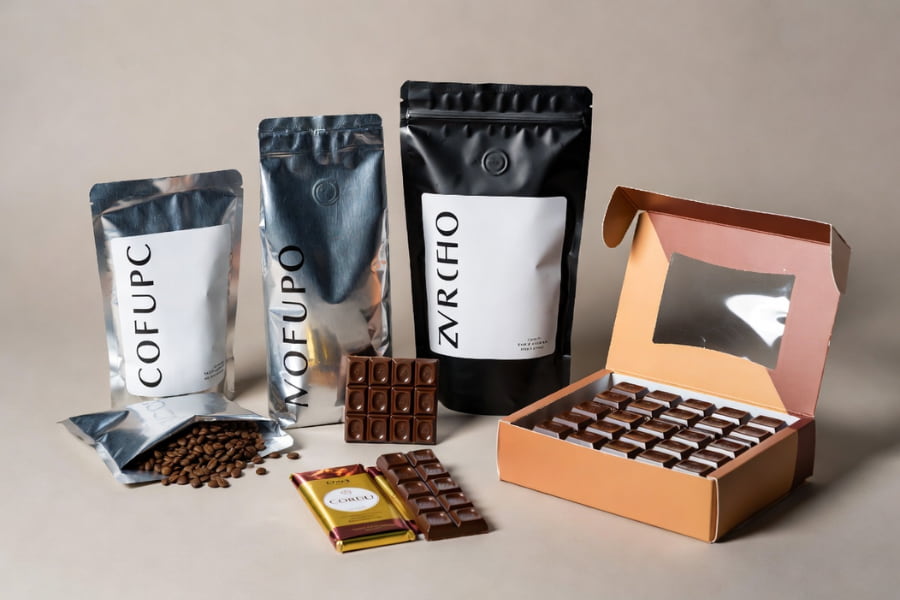
Packaging formats overlap between coffee and chocolate, but their purpose does not.
Coffee is rarely consumed in one sitting. Packaging must support repeated opening while preserving quality over time. Common formats include stand-up pouches with resealable zippers, flat bottom bags offering structural stability and capacities from 8 oz to 5 lbs, side gusset bags designed for volume efficiency, quad seal bags with reinforced corners, metal cans or PET jars for light protection, and pillow bags for short-term distribution.
These formats exist to manage freshness degradation, not just shelf appearance. When coffee is packaged without accounting for repeated exposure to air and moisture, flavor loss accelerates quickly.
Chocolate packaging varies significantly by product form and usage context. Chocolate bars are commonly wrapped in foil with paper sleeves or flow-wrap films. Cacao nibs often use pouch formats similar to coffee. Cocoa powder and drinking chocolate are packaged in resealable bags, tins, or cartons. Gift sets frequently include trays, partitions, or multi-item boxes.
Here, packaging often prioritizes presentation, gifting, and short consumption cycles. Applying long-term coffee storage logic to chocolate bars can add cost without reducing real risk.
Packaging Materials
Material choice is where packaging logic clearly diverges.
Coffee is extremely sensitive to oxygen over time. Packaging typically relies on high oxygen barrier structures using PET, PE, and aluminum foil laminates, combined with strong moisture protection and light-blocking layers. Common constructions include kraft paper combined with PE and foil.
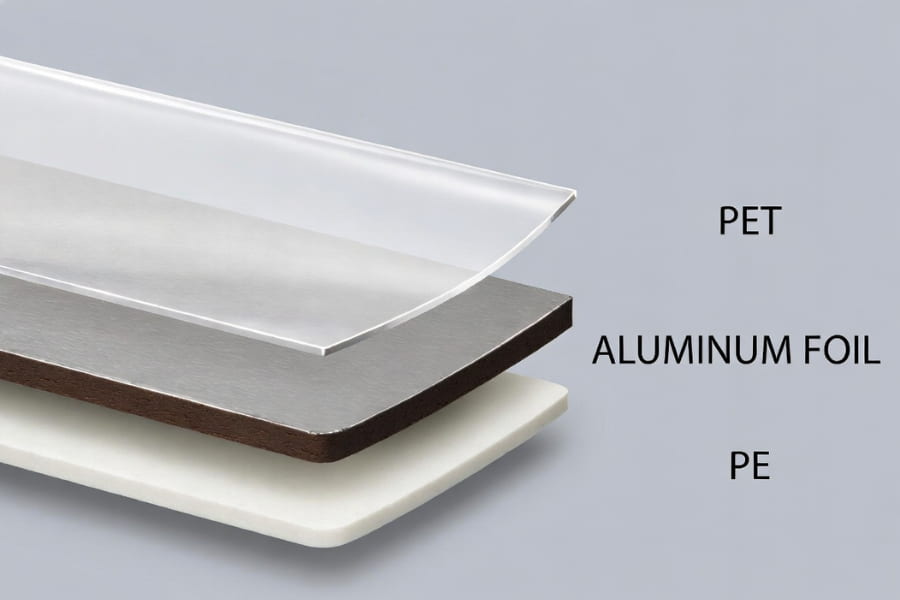
When oxygen barriers are insufficient, flavor loss occurs long before the printed shelf life ends.
Chocolate faces different risks. Packaging materials focus on moisture resistance to prevent melting and texture changes, odor barriers to avoid flavor contamination, temperature adaptability through cold-seal films, and decorative layers that support premium presentation.
Using coffee-grade barrier structures for chocolate does not prevent temperature-related defects.
Critical Packaging Functions
Freshly roasted coffee releases carbon dioxide for days or weeks after roasting. Coffee packaging therefore requires one-way degassing valves to release gas while blocking oxygen. Without a valve, bags can swell, seals may fail, and product returns increase. Chocolate does not release gas and does not benefit from valve structures.
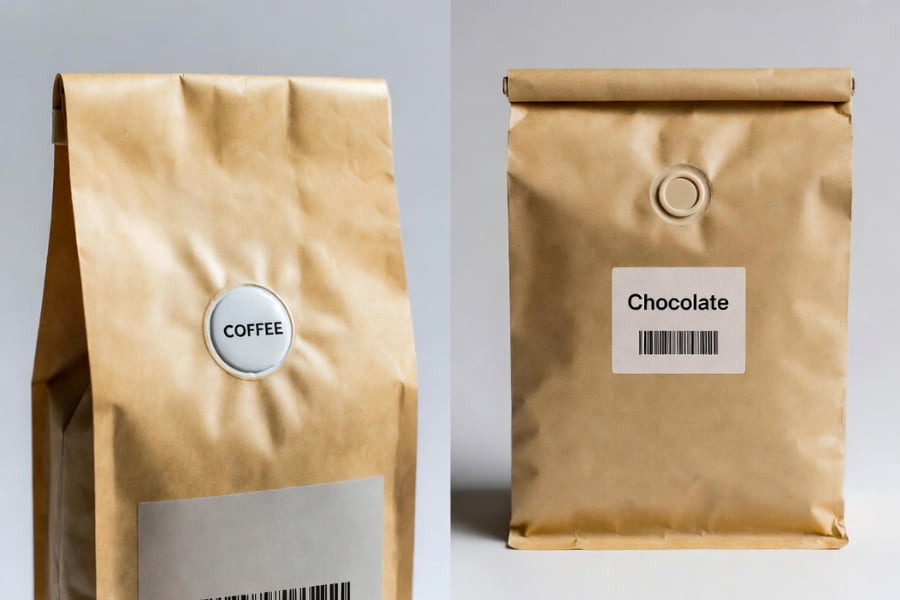
Coffee requires very low oxygen transmission rates, often below 0.2 cc per square meter per day, to slow oxidation and preserve aroma. Chocolate also needs oxygen control, primarily to prevent fat bloom and discoloration. Moisture failures affect coffee gradually, while chocolate defects often appear suddenly and visibly.
Light protection is another shared concern. Coffee commonly uses opaque or foil-lined films to protect flavor from UV exposure. Chocolate frequently uses foil or tinted films, sometimes allowing partial visibility for aesthetic reasons.
Windows increase shelf appeal but weaken barrier performance. When windows are added without compensating layers, shelf life shortens silently.
Resealability is almost always necessary for coffee packaging to support repeated use. Chocolate packaging typically uses resealability only for nibs or powders, as chocolate bars are usually designed for immediate consumption.
Sustainability in Coffee and Chocolate Packaging
Sustainability is a growing priority in both categories, but the technical paths differ.
Coffee packaging sustainability efforts include compostable kraft bags with PLA linings, mono-material recyclable pouches, recyclable or compostable degassing valves, and increased use of post-consumer recycled content.
Chocolate packaging sustainability focuses on paper wraps replacing foil, home-compostable cellulose films, paperboard trays instead of plastic inserts, and metal tins with permanent recyclability.
Across both categories, material traceability, plastic reduction, and certified labeling matter. Sustainability claims that ignore performance testing create downstream quality risk.
Packaging Design Decisions
Design choices influence both shelf impact and real-world use.
Coffee brands often rely on minimalist, artisanal, or origin-focused design systems that emphasize clarity and freshness cues. Chocolate packaging typically leans into color, texture, cultural references, and premium finishes to communicate indulgence and gifting value.
Effective packaging guides attention. The first glance communicates flavor, origin, or brand. Secondary information highlights roast level, cacao percentage, or certifications. Deeper layers explain processing methods and sourcing stories.
User experience also plays a critical role. Easy opening, appropriate resealability, tactile materials, and clear storage guidance influence how products are handled after purchase. Poor user experience often leads to improper storage, even when materials are technically correct.
FAQ
Why do coffee bags need degassing valves
Freshly roasted coffee continues releasing carbon dioxide after packaging. Degassing valves allow gas to escape while blocking oxygen from entering. Without a valve, bags can swell, seals may fail, and freshness declines faster, increasing the risk of damaged packaging and product returns.
How can I evaluate oxygen barrier performance
Check the oxygen transmission rate, or OTR. Coffee and chocolate packaging commonly targets values below 0.2 cc per square meter per day. Lower OTR slows oxidation, protects aroma and flavor, and helps products maintain quality throughout their intended shelf life.
Why does chocolate develop bloom and how can packaging help
Chocolate bloom occurs when fats or sugars migrate to the surface due to temperature fluctuation or oxidation. High oxygen and moisture barrier packaging helps stabilize the product, reducing visible defects, texture changes, and perceived quality loss during storage and distribution.
Why is aluminum foil commonly used for chocolate bars
Aluminum foil provides strong protection against light, moisture, and external odors while conforming easily to bar shapes. These properties help preserve chocolate flavor, appearance, and shelf stability, especially in temperature-sensitive retail and logistics environments.
Are window packages suitable for long-term storage
Windows reduce barrier performance by allowing more light and air exposure. For long-term storage, they should be paired with reinforced backing materials and light control. Without compensation, window designs can shorten shelf life even if the rest of the package performs well.
Does sustainable packaging reduce freshness
Not necessarily. Many certified compostable or recyclable materials now offer strong oxygen and moisture barriers. Performance depends on material structure and testing. Sustainable packaging should always be evaluated under real storage and distribution conditions rather than assumed to perform worse.
How should brands choose the right packaging
Brands should evaluate product behavior, shelf life risk, distribution conditions, sustainability goals, cost constraints, and user handling together. Packaging decisions are most effective when based on real product risks and testing, not visual similarity or assumptions from other categories.
Final Takeaway
Coffee packaging is designed to manage gas release, oxidation, and long-term freshness. Chocolate packaging is designed to control temperature shifts, odor absorption, and visual impact.
They may look similar on the shelf, but they fail in different ways when packaged incorrectly. The fastest way to damage product quality is to copy packaging logic across categories.
Brands that evaluate packaging based on product behavior rather than appearance reduce returns, protect flavor, and preserve brand trust over time. For teams navigating flexible packaging decisions across coffee and chocolate products, GAIA supports testing-driven material selection and custom packaging systems that align performance, sustainability, and real-world use.


