Where to Sell Your Coffee and How Each Channel Shapes Your Business
Where you sell your coffee is not just a distribution decision.
It is a strategic choice that shapes your brand position, pricing power, and long-term growth path.
Many coffee brands struggle not because their product lacks quality, but because their sales channels do not match who they want to become. Before chasing volume, it’s worth slowing down and choosing channels that support your business goals rather than working against them.
Where you sell coffee determines how customers perceive your brand, how much they are willing to pay, and how scalable your business can become.
How Different Sales Channels Shape Your Coffee Brand and Pricing
Every sales channel sends a signal. Those signals influence how your coffee is valued, not just priced.
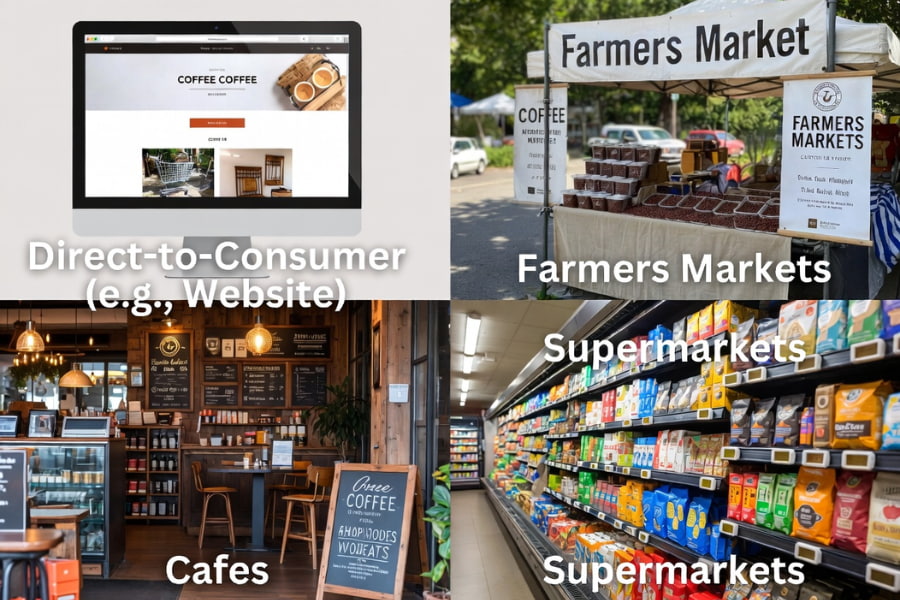
High-End Channels Such as Specialty Grocers and Independent Cafés
Premium retail environments support higher prices and stronger storytelling. Customers in these spaces expect clear origin information, consistent quality, and visible sustainability efforts.
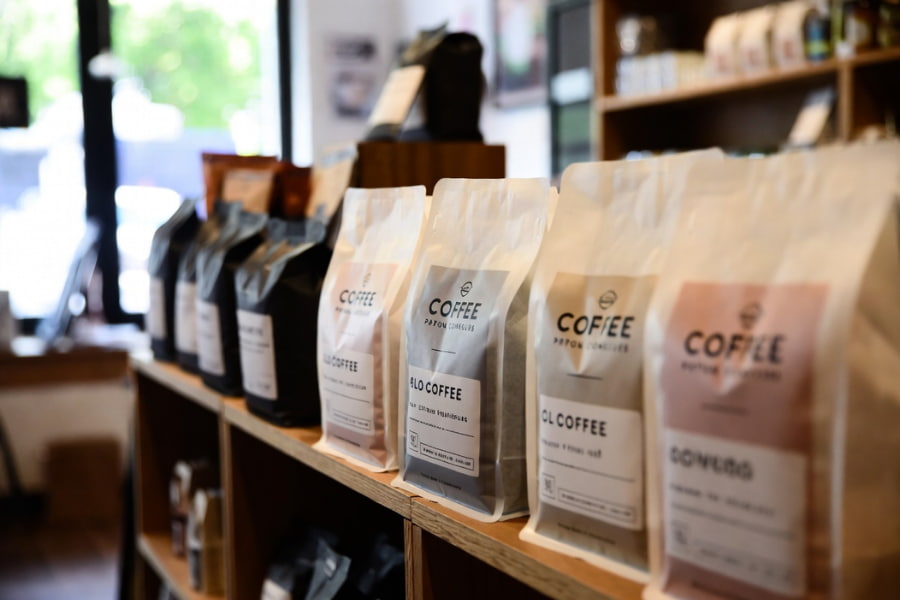
These channels work well for brands built around craft and credibility. Volume is often limited, but margins and brand equity are stronger. For many early-stage brands, this environment helps reinforce positioning before expanding elsewhere.
Mass Channels Such as Big-Box and Wholesale Retailers
Large retailers deliver reach and predictable demand. The trade-off is margin pressure and reduced control over brand presentation.
These channels favor brands with scalable production, tight cost control, and operational discipline. For most coffee businesses, mass retail is not a starting point. It is a capacity decision, not a marketing one.
Owned Channels Such as Websites and Brand-Operated Stores
Selling through your own channels offers maximum control. Pricing, messaging, and customer experience stay in your hands.
The responsibility increases as well. Fulfillment, customer support, and logistics quickly become core operations. For many brands, owned channels provide the clearest feedback loop and the healthiest margins when managed well.
The Main Places to Sell Coffee and How to Get Started
Supermarkets and Large Retail Stores
Supermarkets are changing. As consumer expectations rise, many retailers are expanding beyond commodity coffee and adding specialty brands.
Shoppers increasingly look for origin clarity, flavor descriptions, ethical sourcing, and sustainable packaging. This creates opportunity, but also higher expectations.
Brands usually choose between selling under their own name or joining white-label programs that prioritize volume over margin. Retail buyers expect a concise, professional pitch that highlights origin, flavor profile, processing methods, relevant certifications, and packaging sustainability.
Before approaching supermarkets, it’s important to assess whether your operation can support consistent supply without compromising freshness. Nitrogen-flushed packaging and clear best-by dates help align with retail realities, and whole-bean formats generally perform better over longer shelf cycles.
Farmers’ Markets and Local Pop-Up Markets
These channels are often the most practical starting point for new or growing brands.
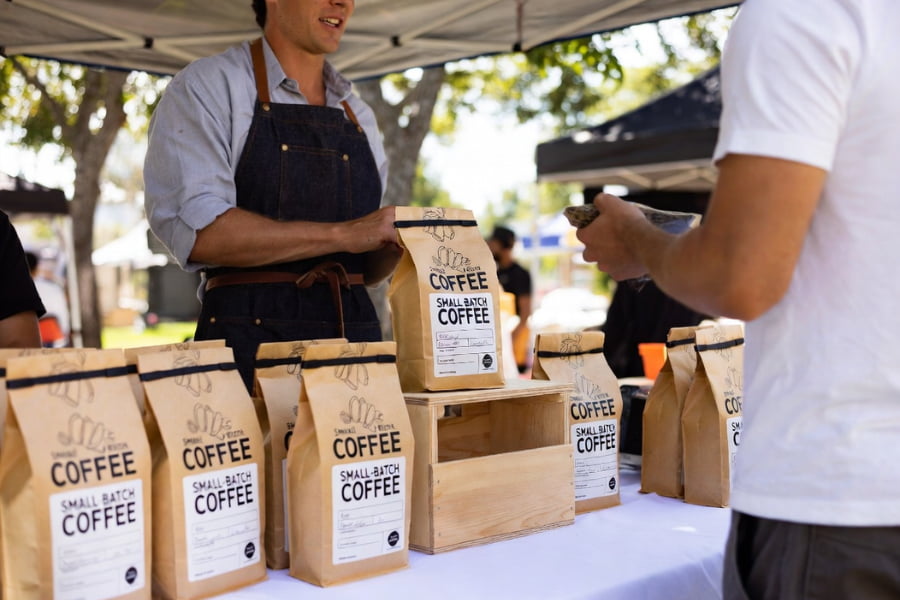
They allow direct interaction with customers, immediate feedback, and lower barriers to entry. Farmers’ markets are not just sales channels. They are learning environments.
Consistency matters. Showing up regularly builds recognition and trust. Smaller bag sizes and sampler packs help reduce hesitation for first-time buyers and encourage trial.
Restaurants, Cafés, and Hotels
Many foodservice operators want quality coffee without roasting in-house.
Independent cafés, quality-driven restaurants, and boutique hotels are often good partners. Quality control is critical. Even excellent coffee suffers when brewed incorrectly.
Whole beans preserve freshness and flexibility, while pre-ground formats often reduce quality perception. Providing basic brewing guidance or support can strengthen partnerships and protect cup quality.
Wholesale and Distribution Channels
Wholesale accelerates reach, but it shifts control.
Some brands work with distributors that handle logistics and retail access. Others supply retailers directly for higher margins, but with more responsibility.
Distributors should demonstrate reliable retail relationships and fulfillment systems. Clear agreements on pricing, volume expectations, and payment terms help prevent future friction. Wholesale works best when production and logistics are already stable.
Selling Coffee Directly to Consumers
Direct-to-consumer channels allow brands to build relationships, not just transactions.
Common options include brand-owned websites, social commerce platforms, and subscription programs. Success depends on clear storytelling, consistent visuals, and a smooth purchasing experience.
Checkout, shipping, and customer support must be reliable. Many brands use first-purchase incentives or referral programs to reduce friction and encourage repeat orders.
Questions to Ask Before Choosing Where to Sell Your Coffee
Clarifying brand positioning is the first step. Are you building a premium niche brand or a volume-driven one? Where do your customers already shop, and what do they value most?
Production capacity matters just as much. Can you fulfill larger orders consistently? Do you have systems for storage, delivery, and inventory control?
Sales objectives should be explicit. Are you optimizing for margin or reach? Are you willing to trade brand control for faster scale?
For most brands, starting with direct and local channels provides the strongest foundation before expanding into wholesale or mass retail.
How to Manage and Adjust Your Sales Channels Over Time
Sales channels are not static decisions.
Performance data and customer feedback should guide ongoing adjustments. Different channels may require different packaging, pricing, or even product variations.
In our work with flexible packaging at GAIA, we often see brands underestimate how quickly channel expansion affects packaging requirements, shelf life expectations, and operational complexity. Planning for these shifts early reduces costly revisions later.
Strong relationships with buyers and distributors matter, as does active inventory management. Coffee that sits too long damages both quality and brand trust.
FAQ
Which sales channel should I start with?
Most coffee brands benefit from starting with low-cost, high-interaction channels such as farmers’ markets, local retail partnerships, or direct-to-consumer sales. These options allow you to test demand, gather customer feedback, and refine pricing and positioning before committing to larger wholesale or retail channels.
How can I attract supermarket buyers?
Supermarket buyers look for clear differentiation and operational readiness. Prepare a concise pitch that highlights your coffee’s origin, flavor profile, certifications, and sustainability efforts. Supporting sales data, consistent supply capacity, and shelf-ready packaging also improve your chances of being considered.
Is direct selling or wholesale more profitable?
Direct selling typically delivers higher margins because you control pricing and customer relationships, but it requires more operational effort. Wholesale offers lower margins but steadier volume and simpler logistics. The more profitable option depends on your production capacity, resources, and long-term growth strategy.
How can I keep coffee fresh on supermarket shelves?
Maintaining freshness in retail environments requires extended shelf life strategies. Nitrogen-flushed packaging, whole-bean formats, and clearly labeled best-by dates help preserve quality. Regular shelf checks and inventory rotation further reduce the risk of stale product reaching consumers.
Do I need different packaging for different sales channels?
Yes. Supermarket packaging should focus on shelf visibility, durability, and freshness protection. Direct-to-consumer packaging can emphasize storytelling, unboxing experience, and brand connection. Adapting packaging by channel helps meet both functional requirements and customer expectations.
What is the 15 rule for coffee?
The 15 rule suggests using coffee within about 15 days of roasting for optimal flavor, especially for whole beans. While modern packaging can extend shelf life, this guideline highlights the importance of freshness and proper storage throughout the supply chain.
Do you need FDA approval to sell coffee?
In the United States, coffee does not require pre-market FDA approval. However, businesses must comply with FDA food safety regulations, including facility registration, labeling requirements, and Good Manufacturing Practices. Local health regulations may also apply depending on how and where you sell.
Choosing the Right Way to Sell Your Coffee
There is no universal path. The strongest coffee brands choose sales channels that reinforce who they are and where they want to go.
Start where control and learning are highest. Scale when systems are ready. Adjust as feedback comes in.
Where you sell your coffee will shape your brand far more than most people expect. Choose deliberately.


